Certificate of Completion vs. Diploma: What’s the Difference?
 Homeschool Reports9 min read
Quick answer
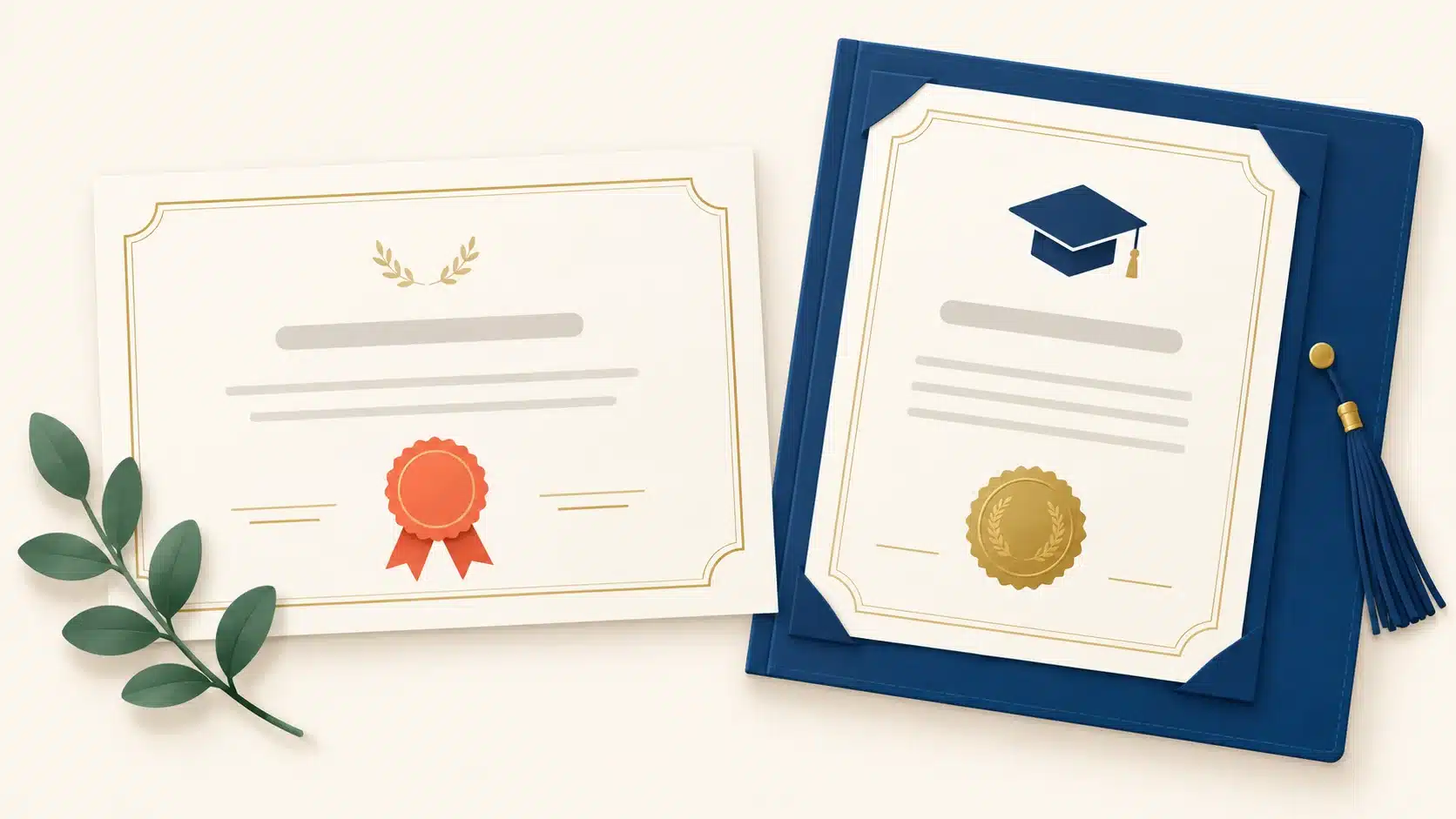
The certificate of completion vs diploma difference comes down to scope. A certificate of completion celebrates finishing something smaller — a course, a grade level, a co-op class, a reading program. A diploma says a student has finished high school. For homeschool families, the difference is simple: certificates mark the milestones along the way, and the diploma marks the finish line.
If you’ve ever stood at the printer wondering whether your eighth grader gets a “diploma” or your high schooler just gets a “certificate,” you’re not alone. The two words get used loosely, and the confusion is understandable — both are pieces of paper with a seal and a signature. But they say very different things, and the certificate of completion vs diploma question matters most at exactly the moment you least want to guess: graduation. (If you’d like to skip the formatting entirely, you can create both from a free Homeschool Reports account using the records you already keep.)
Here’s what each document actually means, when to use which one, and how to make them without spending an evening wrestling a word processor.
- A certificate of completion recognizes finishing a course, a grade, or a program
- A homeschool diploma certifies that a student has completed high school
- Only the diploma is the document colleges, employers and recruiters ask about
- A diploma is backed by a transcript that shows the courses and credits behind it
- Certificates can be given at any age, as often as your family has something to celebrate
What each document means
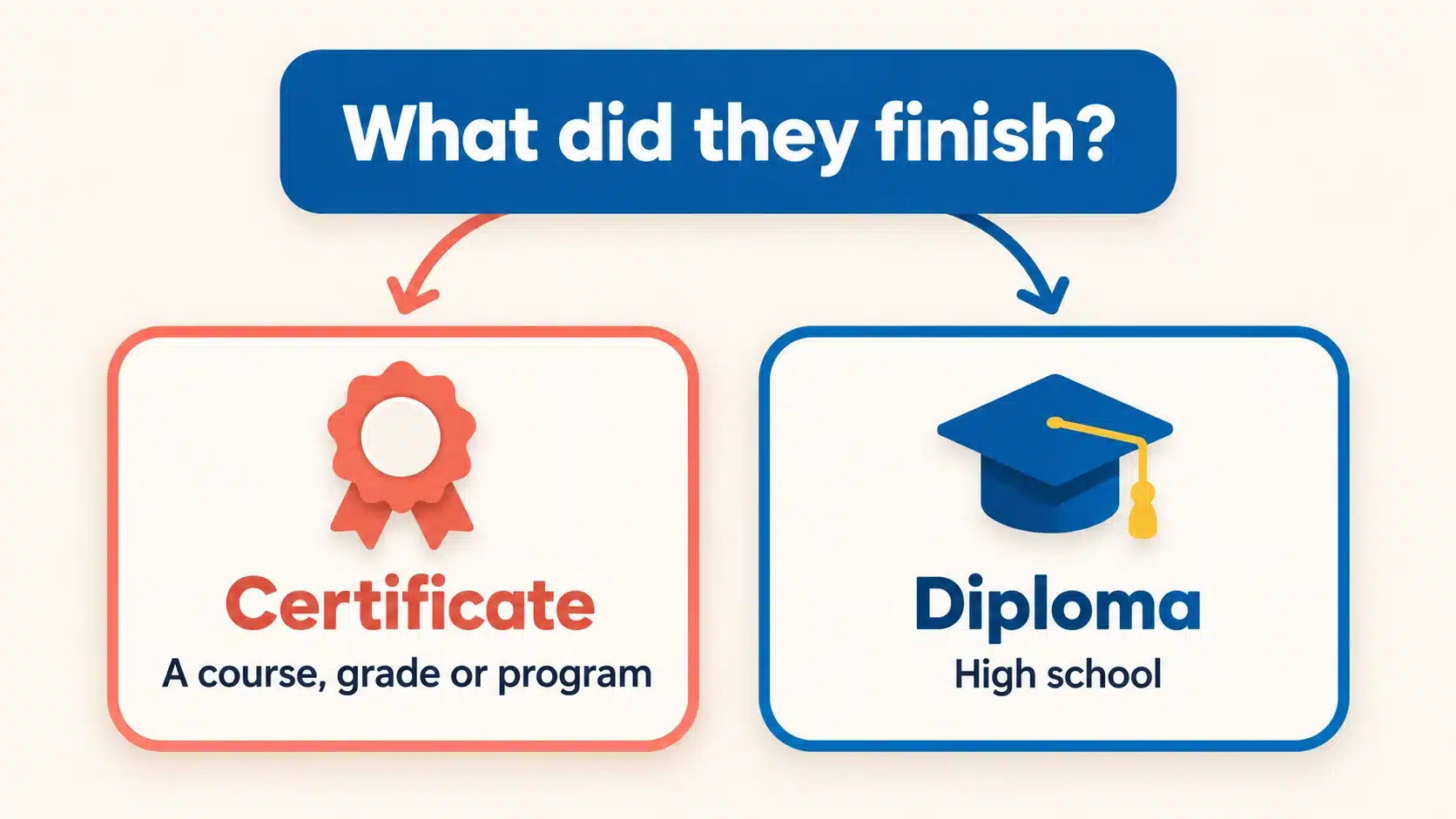
Think of it this way: a certificate answers the question “Did you finish this?” and a diploma answers the question “Did you finish school?”
A certificate of completion is a record of a specific accomplishment. Your ten-year-old finished her first full year of Latin. Your kindergartner completed kindergarten. Your teen finished a driver’s ed course, a lifeguard class, or a semester of biology lab at the co-op. The certificate names the thing, the date and the student, and it’s done. It doesn’t claim anything beyond that one accomplishment.
A homeschool diploma is a much bigger statement. It says the student completed the requirements for high school graduation. In most states, the parent — as the administrator of the home school — is the one who sets those requirements and issues the diploma. What gives a homeschool diploma its weight isn’t the paper; it’s the high school records and transcript standing behind it.
Certificate of completion vs diploma: the key differences
Side by side, the homeschool certificate vs diploma distinction becomes very clear. Neither is “better.” They just do different jobs.
| Certificate of completion | Homeschool diploma | |
|---|---|---|
| What it recognizes | One course, grade, program or milestone | Completion of high school |
| When it’s given | Any age, any time of year | Once, at graduation |
| How many | As many as you like | One per student |
| What backs it up | The finished work itself | A transcript with courses, grades and credits |
| Who asks for it | Mostly Grandma, and the fridge door | Colleges, employers, recruiters, some job applications |
| Main purpose | Celebration and encouragement | Proof of graduation |
A word about “certificate of completion” in public schools
You may run into the phrase in another context, and it’s worth knowing. Some public school systems award a “certificate of completion” to students who attended high school but did not meet the full diploma requirements. In that setting it is not equivalent to a diploma — one state education department’s fact sheet notes that certificate holders may not be eligible for federal financial aid, for example. That’s exactly why you never want to hand a graduating homeschool senior a document titled “certificate of completion.” Call it what it is: a diploma.
Certificates celebrate the steps. The diploma declares the destination.
Have a milestone to celebrate this week? Print a free certificate of completion →
When to use a certificate
Certificates are the everyday encouragement of a homeschool. They’re cheap to give, meaningful to receive, and there’s no such thing as too many — as long as each one marks something real.
End of a grade
Kindergarten, fifth grade, eighth grade — a “promotion” moment without calling it graduation.
Finishing a course
The whole math book, a full year of piano, a history curriculum cover to cover.
Co-op and outside classes
Lab science, speech, art, or a semester-long elective taught by someone else.
Programs and challenges
A summer reading goal, a memory-verse challenge, a first-aid or safety course.
For an eighth grader moving up, a certificate of completion is the right choice — save the word “diploma” for high school. Our free homeschool certificate of completion template walks through the wording.

When to issue a diploma
The diploma is a once-in-a-childhood document, and it should be given once — when your student has genuinely finished high school by the standard you set. Before you print it, make sure the paper trail is in order.
- Check your state’s rulesMost states leave graduation requirements to the parent, but a few have specific expectations. Look up your state’s homeschool requirements before you decide what “finished” means.
- Set your graduation requirementsDecide the credits your student needs in English, math, science, history and electives. Write them down — a standard you can show is a standard you can defend.
- Finish the transcriptList every high school course, grade and credit. This is the document a college actually reads; the diploma points to it.
- Choose the graduation dateUse the real date the requirements were met, not a date that just looks nice.
- Print, sign and celebratePrint on heavy paper, sign it as the school administrator, and give it the ceremony it deserves.
For the full walkthrough, our guide on how to get a homeschool diploma covers the requirements in more detail. And if your graduate is heading to college, remember that admissions offices care far more about the transcript than the diploma.
Creating either one easily
You can absolutely make both in a word processor. It’s just slower than it looks — and the diploma, in particular, needs to look like something you’d frame, not a flyer.
The template-hunting way
- Download a template and fight the text boxes
- Retype names, dates and courses for every child
- Keep the transcript in a separate spreadsheet
- Start over when you notice a typo after printing
With Homeschool Reports
- Certificates of completion and achievement in a few clicks
- A print-ready homeschool diploma with your homeschool’s name
- The same records build the transcript behind it
- Fix a typo and reprint any time
Certificates for the milestones, a diploma for the finish line
Homeschool Reports turns the student profile you already have into print-ready certificates of completion, certificates of achievement and a high school diploma — backed by the transcript that makes it count.
- Certificates for any course, grade or program
- A frame-worthy diploma with your homeschool's name
- Transcripts and report cards from the same records
- No credit card required
- Free forever plan
- Set up in under 5 minutes
- Cancel any time
Celebrating each milestone in its right season
There is something good about giving a child the right recognition at the right time. A certificate for finishing the hard math book says, I saw you persevere. A diploma at the end of senior year says, you are ready for what’s next. Mixing the two up doesn’t just muddle a document — it blurs the story of your child’s growth.
“To every thing there is a season, and a time to every purpose under the heaven.”Ecclesiastes 3:1
So celebrate often. Hand out certificates for the small finish lines that make up a homeschool year. Then, when the big day comes, give the diploma the weight it has earned. For ideas on wording and presentation, our homeschool diploma guide is a good next read.
Getting ready for graduation? Build your diploma and transcript free →
Can I give my eighth grader a diploma?
You can print anything you like, but a certificate of completion is the clearer choice. Reserving “diploma” for high school graduation keeps your records unambiguous when it really matters.
Is a homeschool diploma as valid as a public school diploma?
In most states, a diploma issued by a parent running a legally compliant home school is a legitimate high school diploma. Its credibility comes from the transcript and records behind it. Laws vary, so check your own state’s homeschool rules.
Should a homeschool graduate ever receive a “certificate of completion” instead of a diploma?
Generally no. In public schools that phrase can signal a student did not meet diploma requirements, so using it for a graduating senior invites confusion with colleges and employers.
Do colleges look at the diploma or the transcript?
Admissions offices rely mainly on the transcript, plus test scores and applications. The diploma confirms graduation; the transcript shows what the student actually studied.
How many certificates is too many?
If each one marks something your child genuinely finished, there’s no limit. Certificates lose meaning only when they’re handed out for nothing in particular.
Simple pricing for homeschool families
Every plan includes every feature. Start free — upgrade only when you want watermark-free PDFs.
Starter
Free forever, every feature
$0Free for as long as you like
- Every report included
- Unlimited reports & records
- 1 child, upgrade anytime
Family
Single homeschool family
$39per year (or $9/mo)
- 5 Children + Add More
- Attendance Tracking
- Report Cards & Transcripts
School
Group, co-op, church or school
$149per year (or $49/mo)
- Unlimited children
- Everything in Family
- Manage multiple families
Certificates and diplomas aren’t competing documents — they’re chapters of the same story. Mark the milestones as they come, keep good records as you go, and when graduation arrives, the diploma will be the easiest thing you print all year.
Start celebrating milestones free
Set up your children once and Homeschool Reports keeps the records that turn into certificates, report cards, transcripts and, one day, a diploma.
- Free forever plan, no credit card
- Certificates and diplomas, print-ready
- Every record in one place, all year
- No credit card required
- Free forever plan
- Set up in under 5 minutes
- Cancel any time