Learning Songs for Kids: Why Teaching With Songs and Videos Works
 Homeschool Reports8 min read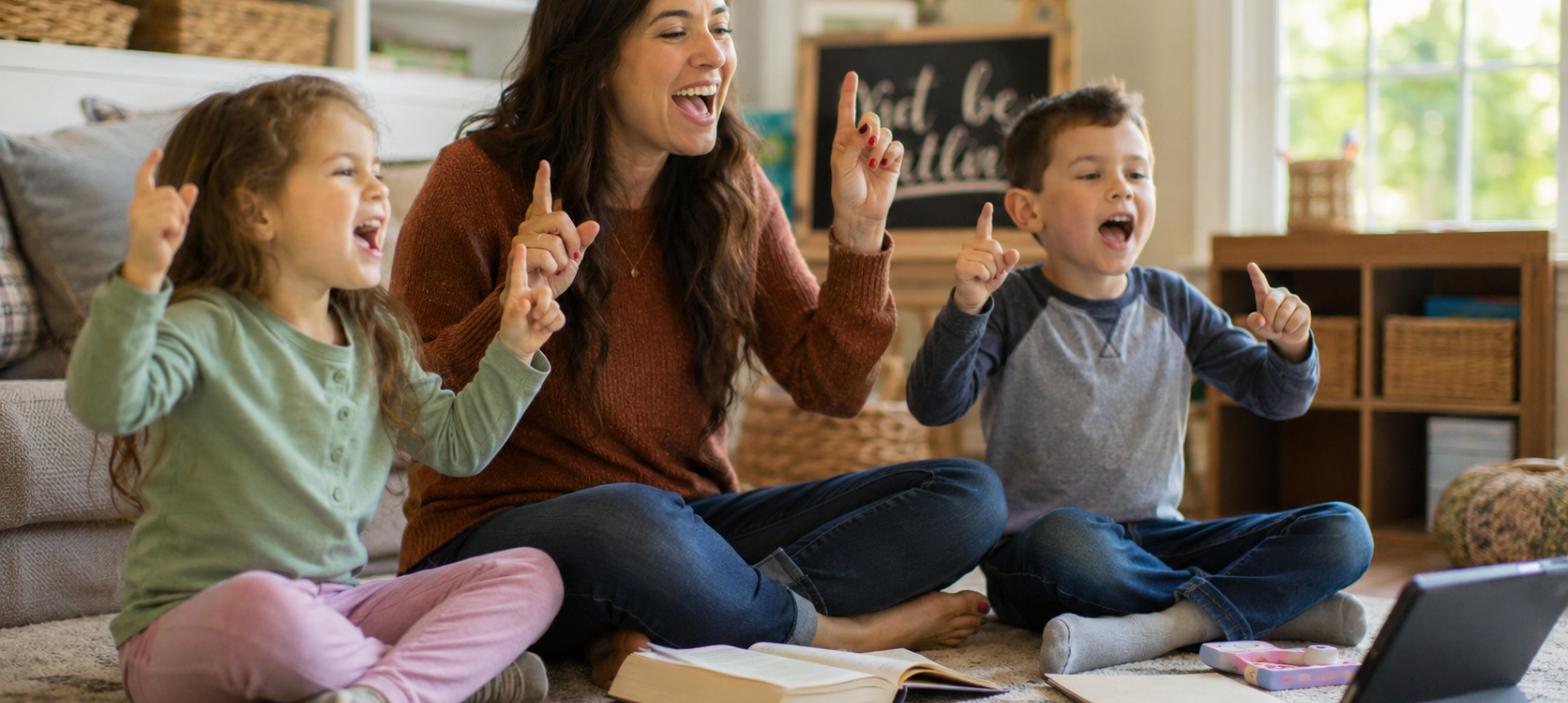
If you’ve ever caught your child humming a jingle from a commercial they saw once, you already know the secret every kindergarten teacher relies on: kids remember what they sing. That’s exactly why learning songs for kids are one of the most powerful tools you can keep in your homeschool. A catchy melody can lock in the alphabet, the days of the week, skip-counting, or the water cycle far faster than a worksheet ever will—and it does it while your children are laughing instead of groaning.
If your lessons have started to feel like a slog, songs and short teaching videos might be the gentle reset your home needs. Let’s look at why they work, which subjects they fit best, and how to use them without letting screens take over.
The science of musical memory
There’s a real reason a tune sticks when facts don’t. When information is set to music, your brain stores it in more places at once—rhythm, melody, and words all get filed together. That gives your child multiple pathways to pull the memory back out later. It’s the same principle that lets an adult remember every word of a song from twenty years ago but not where they left their keys this morning.
Music also engages emotion, and emotion is memory’s best friend. A joyful, silly, or beautiful song creates a positive feeling around the material, so your child associates learning with delight instead of pressure. For younger children especially, that emotional connection matters as much as the content itself.
Why songs beat plain repetition
Repeating a fact ten times is boring, so kids tune out. Singing it ten times is fun, so they lean in—and the melody carries the words along automatically. You get the repetition your child’s brain needs without the resistance.
Rhythm does something helpful too. A steady beat naturally chunks information into bite-sized pieces—think of how “thirty days hath September” breaks the calendar into a manageable rhyme. Those chunks are easier to hold in working memory and easier to recall on test day, or better yet, in real life.
Best subjects for learning songs for kids
Almost anything sequential, list-based, or rule-heavy is a perfect candidate for music. When you’re deciding where to add a song, look for the material your child has to memorize in a specific order. Here are the subjects where songs tend to shine brightest:
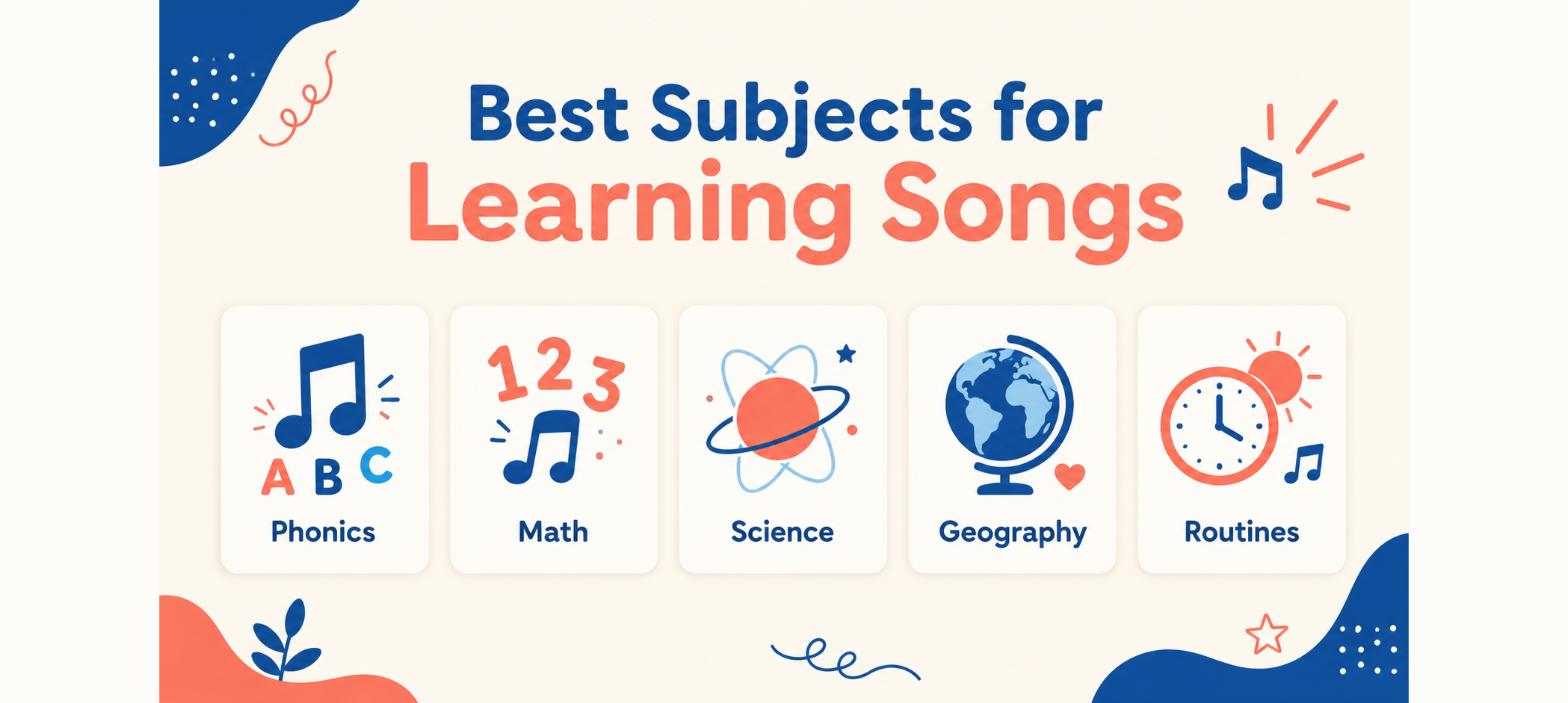
- Phonics and reading: letter sounds, blends, sight words, and vowel rules practically beg to be sung. Alphabet and phonics songs give early readers the repetition they need without the drill-and-kill feeling.
- Math: skip-counting, multiplication tables, and even the steps of long division all stick better with a beat. A times-table song can save weeks of flashcard frustration.
- Science: the planets, the life cycle of a butterfly, the layers of the earth, states of matter—songs turn abstract sequences into something your child can recite with a grin.
- History and geography: the fifty states, the presidents, continents and oceans, or the timeline of an era all fit neatly into verses.
- Everyday routines: a clean-up song or a days-of-the-week tune builds structure into your day and teaches gently at the same time.
Mom tip
Let your child make up motions to go with each song. Adding hand movements engages the body as well as the ears, and it turns a two-minute review into an active brain break that burns off a little wiggle energy too.
Videos that actually teach
Not all screen time is created equal, and a well-made teaching video can do things a song alone can’t. A short video can show your child a chick hatching, demonstrate how to form a cursive letter, or walk step by step through a two-digit addition problem while they watch and copy along. For visual and hands-on learners, seeing a concept in motion can be the moment it finally clicks.
The key is choosing videos that teach rather than merely entertain. Before you press play, ask yourself a few quick questions: Does this video have a clear learning goal? Is it short enough to hold attention—usually five to ten minutes for younger kids? Does it invite my child to do something, like sing along, count, or answer a question? A great teaching video treats your child as a participant, not a passive viewer.
Educational song-and-video programs are especially strong here because they combine both tools at once. Your child hears the catchy tune and sees the concept illustrated, which doubles the memory pathways we talked about earlier. If you’d like a place to build your whole rhythm of the day around this approach, our homeschool curriculum weaves songs and videos right into everyday lessons.
There’s something beautiful about a home filled with music. When your children are singing their spelling words in the morning and a hymn at bedtime, you’re not just teaching facts—you’re setting a tone of joyful, thankful learning that becomes part of who your family is.
Avoiding screen overload
Here’s the honest tension every homeschool mom feels: videos are helpful, but too much screen time doesn’t sit right. The good news is you don’t have to choose between using videos and protecting your child’s attention. You just need a few simple guardrails.
Start by treating videos as a seasoning, not the meal. A song or teaching clip works best as a five-minute anchor at the start of a lesson, followed by hands-on practice—writing, building, coloring, or talking it through with you. When the screen introduces a concept and real life reinforces it, you get the benefit without the glaze-over.
A few more habits keep screens in their proper place:
- Watch with your child when you can. Your presence turns passive viewing into a shared experience, and you can pause to ask questions or celebrate an “aha” moment.
- Set a clear stop point. “We’ll watch two songs, then we’ll act them out” gives your child a predictable boundary and prevents the endless-autoplay trap.
- Favor short over long. Two focused minutes beats twenty passive ones every time.
- Always follow up off-screen. Have your child teach the song back to you, draw the concept, or use it in a real activity. That’s where the learning cements.
Used this way, songs and videos actually reduce total screen time, because they teach efficiently and free the rest of your day for reading, play, and hands-on discovery.
Free places to start
You don’t need a big budget to bring music into your homeschool. Some of the best learning songs for kids are available at no cost, and a small collection goes a long way. Here’s how to begin without feeling overwhelmed:
Songs count as real schoolwork, so write them down like anything else. The free printable report card templates have a blank row for every subject, music included.
- Pick one subject your child is struggling to memorize. Maybe it’s letter sounds, maybe it’s the times tables. Start where the frustration is highest—that’s where a song will feel like the biggest relief.
- Find two or three quality songs for that topic and play them consistently for a week. Repetition of a few good songs beats a scattered playlist of fifty.
- Add motions or a simple activity so the learning is active, not passive.
- Watch your child’s confidence grow, then add music to the next tricky subject.
If you’d like songs and videos that were made specifically to teach—not just to fill time—Have Fun Teaching offers a huge library of educational songs covering phonics, math, science, and more. You can explore their free and premium homeschool resources and start folding a few tunes into your day this week.
The takeaway
Kids remember what they sing. When you pair a joyful song with a short, purposeful video and follow it up with hands-on practice, you make phonics, math, and science stick—while filling your home with the kind of happy, praise-filled learning that lasts far longer than any single lesson.
Give it one week. Pick one song, sing it every day, and watch what happens. You may be surprised how quickly a giggle turns into “I know this one, Mom!”—and how much lighter your whole school day feels when learning sounds like fun.