
Homeschool Laws by State: What Every Parent Should Know
 Homeschool Reports7 min read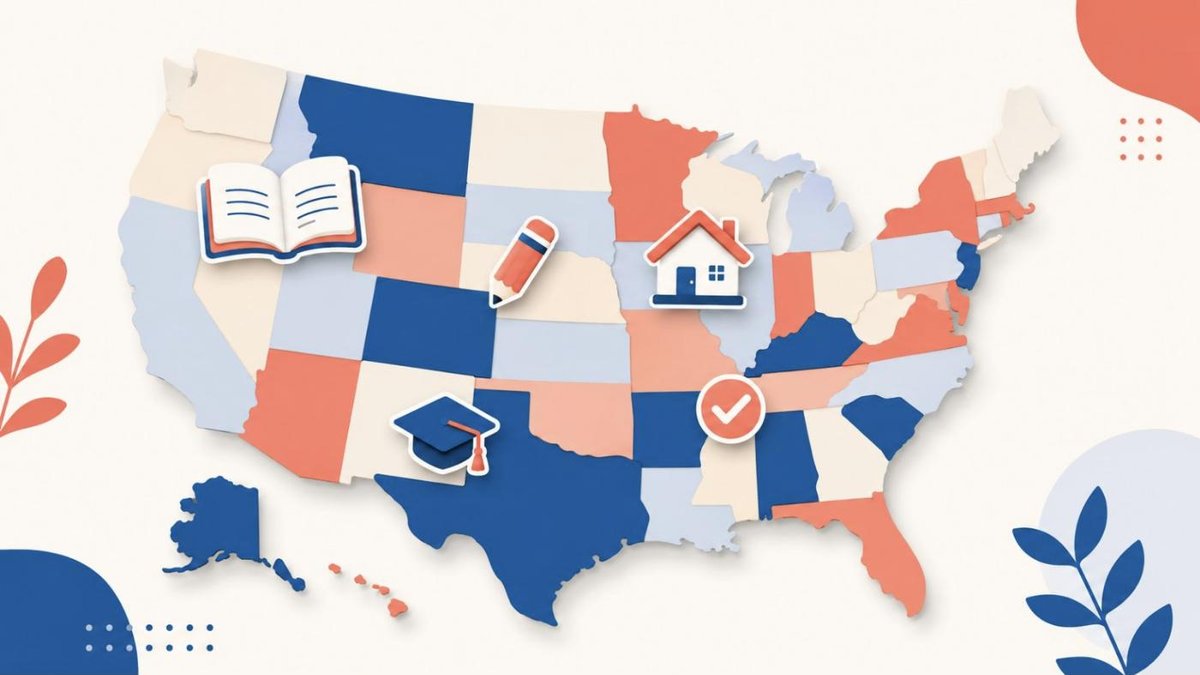
If you’ve ever tried to figure out the homeschool laws by state, you know how quickly it gets confusing. One mom in Texas can start homeschooling tomorrow without telling a soul, while a mom just across the border in Pennsylvania has paperwork, portfolios, and evaluations to think about. Same calling, very different rulebooks. The good news? Once you understand how states are organized, the whole picture gets a lot less scary.
This is a plain-English overview to help you feel grounded and confident. It’s not legal advice, and rules do change, so always confirm the details with your own state’s official page before you begin. Think of this as the friendly map that helps you know what to look for.
The short version
Every state allows homeschooling. What differs is how much the state asks of you: whether you notify anyone, keep records, test, or have your child’s progress reviewed. Most families land somewhere in the comfortable middle.
The 4 levels of homeschool regulation
Homeschool advocates usually sort the homeschool laws by state into four broad tiers. Knowing which tier you’re in tells you almost everything you need at a glance.
- No notice required. You can begin homeschooling without notifying any government office. Around eleven states fall here, including Texas, Oklahoma, Indiana, Michigan, Missouri, Illinois, New Jersey, Idaho, and Alaska.
- Low regulation. You file a simple notice of intent with your local district or state, and that’s essentially it. No portfolios, no testing, no curriculum approval.
- Moderate regulation. You notify and do a bit more, usually keeping records plus either standardized testing or a professional evaluation at certain grade levels.
- High regulation. You notify, keep records, and typically test or have an evaluation, and sometimes submit curriculum or instruction plans. Massachusetts, New York, Pennsylvania, Rhode Island, Vermont, and North Dakota sit in this tier.
Here’s the encouraging part: even the “high regulation” states are completely manageable once you have a simple system. Thousands of families thrive in every single tier. The requirements are speed bumps, not roadblocks.
Mom tip
Don’t compare your state to your best friend’s state. A checklist that works beautifully in Florida may leave out three things New York requires. Always build your routine around your state’s actual list, not someone else’s highlight reel online.
Common requirements explained
When you read your state’s page, you’ll keep bumping into the same handful of terms. Here’s what each one really means in everyday language.
| Requirement | What it actually means |
|---|---|
| Notice / Letter of intent | A short form telling your district a child is learning at home this year. |
| Instructional days or hours | A rough length for your school year, often around 180 days. |
| Portfolio / records | Samples of work and a log showing your child is making progress. |
| Standardized testing | A test at certain grades to show academic growth. |
| Annual evaluation | A simple review of progress, often by a certified teacher. |
Notice that almost every requirement comes down to one idea: showing that real learning is happening. That’s it. You’re already doing the learning. The paperwork just documents what’s true.
Notice of intent basics
The notice of intent (sometimes called a letter of intent or declaration of intent) is the single most common requirement in the country. Roughly thirty states ask for some version of it before you begin, or shortly after you start.
It’s usually short: your name, your child’s name and age or grade, your address, and sometimes the subjects you plan to cover. Some states want it once, ever. Others want it filed each new school year. A few have a specific window, like two weeks before you begin or by a certain date in the fall.
Where does the notice go?
Depending on your state, your notice goes to your local school district, a county office, or the state department of education. Your state’s page will name the exact office and deadline, so you’re never guessing.
If your state requires a notice, put its deadline on your calendar the moment you decide to homeschool. Filing on time is the easiest way to start the year on solid, worry-free footing.
Record-keeping and testing
Whatever your state asks for, the grades are yours to keep. If you record them on paper, there are free printable report card templates you can download and fill in.

Record-keeping sounds intimidating, but it’s really just tidiness with a purpose. In moderate and high regulation states, you may need to keep attendance, a portfolio of work samples, or a reading list, and hold onto test scores or evaluation letters.
Even in a no-notice state where nothing is required, keeping clean records is one of the smartest things you can do. Down the road you may need them for a transcript, a college application, a sports league, or a move to a stricter state. Future-you will be so glad present-you kept good notes.
Mom tip
Set up your record system before the school year gets busy, not in a panic every April. A little structure in August saves a lot of stress in spring. This is exactly the kind of thing a simple tracker was made to handle.
Keeping attendance, grades, progress reports, and transcripts organized in one place means that whether your state asks for a lot or a little, you’re always ready. If the idea of tracking it all by hand makes you tired, you don’t have to. A dedicated homeschool record-keeping tool keeps your attendance, report cards, and transcripts tidy and compliant automatically.
Find your state’s homeschool laws
Because the homeschool laws by state vary so much, the most important step is reading your own state’s rules from a trustworthy source. Look for four things: whether you must notify, how long your school year should be, what records to keep, and whether testing or evaluation is required.
We’ve put together a plain-English page for every state so you don’t have to dig through legal code. You can find yours on our homeschool by state guide, then bookmark it and check it once a year in case anything updates.
A calm, confident way to begin
If you’re just starting out, here’s a simple order of operations that keeps the whole thing from feeling overwhelming:
- Read your state’s page and write down its four basics: notice, school year length, records, and testing or evaluation.
- File your notice of intent if your state requires one, and mark the deadline on your calendar.
- Set up a records system for attendance and grades before your first week, so it becomes a habit instead of a scramble.
- Check back once a year. Requirements occasionally change, and a quick annual review keeps you in the clear.
That’s genuinely the whole game. Four steps, revisited once a year. Everything else is just teaching your kids, which is the part you actually signed up for.
Peace of mind for the whole journey
It’s worth naming the heart behind all of this. Following your state’s requirements isn’t a threat to your family’s freedom, it’s a way of walking in integrity so your homeschool stays protected and above reproach.
We can honor the authorities God has placed over us and cherish the beautiful freedom of teaching our own children at home. Those two things aren’t in conflict. A little paperwork, done faithfully, is simply part of stewarding the calling well.
So take a breath. Find your state, learn its four basics, set up a simple system to keep your records straight, and then pour your energy where it belongs: into the daily, ordinary, holy work of raising and teaching the children in your care. You’ve got this, and you’re not doing it alone.